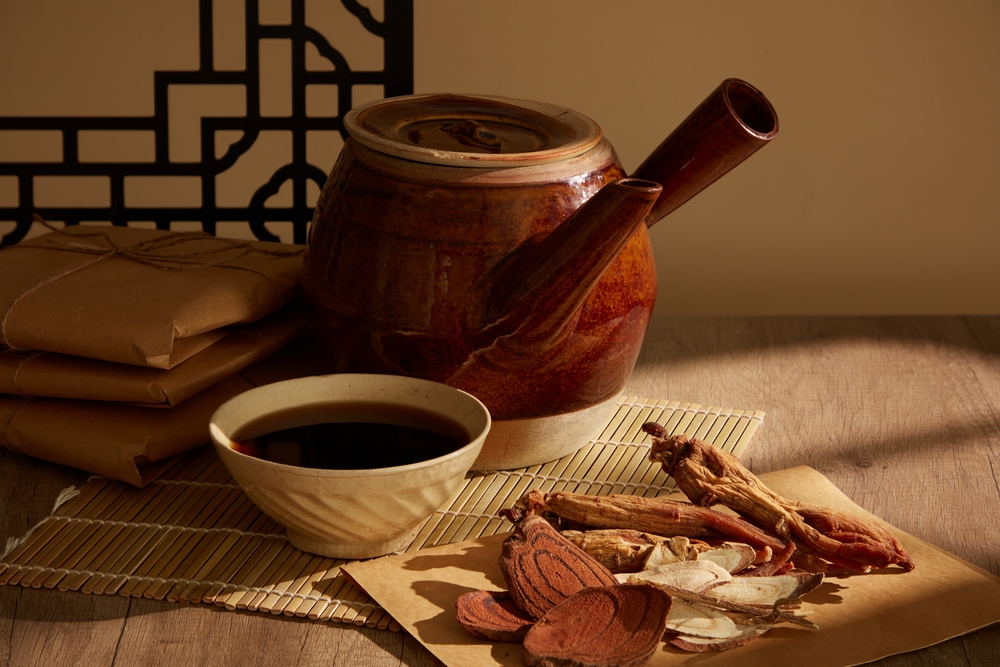
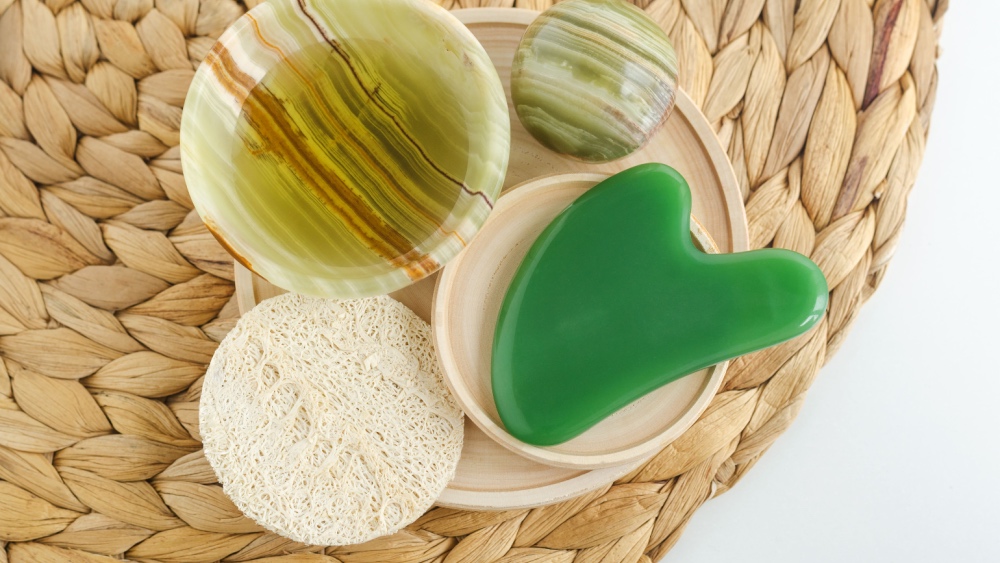
Gua Sha, also known as “scraping therapy” is a centuries-old practice rooted in traditional East Asian medicine. By using smooth tools to gently scrape the skin, Gua Sha is believed to stimulate circulation, release muscle tension, and restore energy balance. From easing neck pain to calming a busy mind, here’s everything you need to know about this fascinating therapy.
WORDS LEE WEN WEN
 FEATURED EXPERT FEATURED EXPERTLEE WEN WEN Traditional Chinese Medicine Practitioner Sunway TCM Centre |
Gua Sha, sometimes called “scraping therapy”, is a traditional East Asian technique that involves repeated strokes on lubricated skin with a smooth-edged tool.
- This creates tiny red or purple spots called Sha (痧), which are believed to signal improved circulation and the release of harmful elements from the body.
- Historically, Gua Sha dates back to the Paleolithic era, when people used stones or animal bones to relieve pain or fever.
- Over time, it became a structured therapy within traditional Chinese medicine (TCM), aimed at balancing qi (energy) and blood flow, expelling wind, and easing stagnation.
DIFFERENT STYLES OF GUA SHA
Gua Sha can be tailored for different needs.
- Facial Gua Sha: Gentle scraping to improve skin tone and microcirculation.
- Therapeutic Gua Sha: Applied to muscles and joints for tension relief.
- Meridian-specific Gua Sha: Focuses on energy channels (meridians) to restore systemic balance.
Gua Sha techniques fall into two main categories:
- Tonifying (Bu, 补): Gentle strokes to replenish energy and blood in cases of deficiency.
- Reducing (Xie, 泻): Stronger, faster strokes to disperse stagnation, clear heat, and promote detoxification.
Modern practitioners sometimes use more specialized tools such as heated Gua Sha plates or ergonomically designed tools for comfort and precision, but the core goal remains the same: improving circulation and regulating energy pathways to support holistic healing.
HOW GUA SHA WORKS
From a TCM perspective, Gua Sha:
- Clears blockages of qi and blood, which can cause pain or illness
- Increases microcirculation
- Modulates immune response
- Encourages metabolic waste clearance
Studies using Doppler imaging confirm that treated areas have better blood flow (microperfusion), reduced inflammation, and relaxed muscles.
Commonly treated areas include regions prone to tension or stagnation such as:
- Back
- Neck
- Shoulders
- Limbs
For conditions like fever or cough, Gua Sha may also be applied to the upper back along the Lung meridian.
RESEARCH-BASED EVIDENCE FOR GUA SHA
Clinical research shows Gua Sha can:
- Relieve chronic neck and shoulder pain
- Reduce fatigue
- Support conditions like perimenopausal syndrome and chronic liver disease
Randomized trials report significant pain relief even after a single session, with additional benefits for immune modulation and inflammation reduction.
SAFETY AND CONSIDERATIONS
- Gua Sha is generally safe when performed by trained practitioners.
- Mild redness or small petechiae are normal and typically fade within 3 to 7 days.
Not for Everyone
Avoid Gua Sha if you have:
- Bleeding disorders or are taking anticoagulants
- Open wounds or skin infections
- Severe cardiovascular issues
Other Points to Consider
- Pregnant women should discuss with their doctor and TCM practitioner first whether it is safe and fine for them to for Gua Sha.
- For beginners, always consult a licensed TCM practitioner.
- Start with gentle pressure and test lubricants on a small patch of skin to prevent irritation.
HOW GUA SHA CAN HELP REDUCE STRESS IN A HECTIC LIFESTYLE
In fast-paced modern life, stress can stagnate Liver qi, leading to irritability, poor sleep, and fatigue.
Gentle Gua Sha can be done at home to provide stress relief and overcome fatigue.
Liver Meridian (Liver Channel)
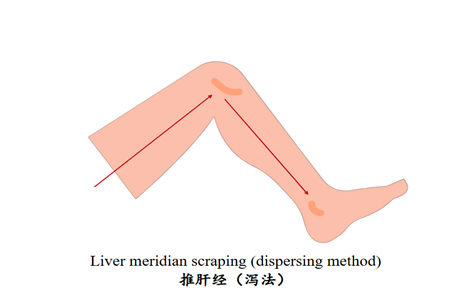
- Perform light strokes along the inner leg from knee to ankle.
- This can soothe tension, regulate emotions, and improve mood.
Earth Line on the Sole (地筋 or Dì Jīn)
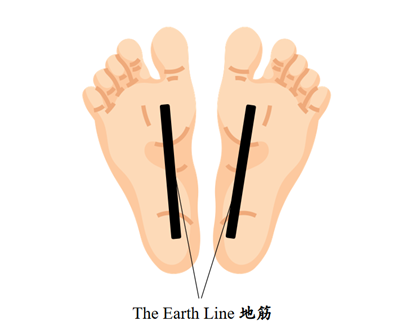
To find the earth line on the foot:
- Sit in a comfortable position and lift one foot so the sole faces you.
- Straighten the foot so the arch is exposed.
- Then, gently bend your toes backward toward the top of the foot.
- As you do this, a firm, cord-like tendon will become more prominent.
- This tendon is difficult to see visually, so it is best identified by touch. Use your fingers to feel along the center-front area of the sole—once you detect a thick, firm band running through the area, you have located the earth line.
Once you have located the earth line:
- Add a small amount of lubricant to the area.
- Use a light-pressure tool to apply slow, gentle strokes on the earth line.
This technique helps to:
- Release tension
- Promote circulation
- Provide a grounding sensation
Thus, it is suitable for people experiencing fatigue, overthinking, or emotional stress.
CONCLUSION
Gua Sha bridges ancient wisdom and modern science.
By promoting circulation, easing tension, and supporting energy balance, it offers a simple yet effective way to nurture body and mind.
Whether for pain relief or stress management, understanding the principles behind this traditional therapy allows you to explore it safely and confidently.
| This article is part of our series on traditional and complementary medicine. |
References:
- Braun, M., Schwickert, M., Nielsen, A., Brunnhuber, S., Dobos, G., Musial, F., Lüdtke, R., & Michalsen, A. (2011). Effectiveness of traditional Chinese “gua sha” therapy in patients with chronic neck pain: A randomized controlled trial. Pain Medicine, 12(3), 362–369. https://doi.org/10.1111/j.1526-4637.2011.01053.x
- Lee, M. S., Choi, T. Y., Kim, J. I., & Choi, S. M. (2010). Using Guasha to treat musculoskeletal pain: A systematic review of controlled clinical trials. Chinese Medicine, 5, 5. https://doi.org/10.1186/1749-8546-5-5
- Nielsen, A. (2014). Gua Sha: A traditional technique for modern practice (2nd ed.). Elsevier Health Sciences. https://www.perlego.com/book/2937973/gua-sha-a-traditional-technique-for-modern-practice-pdf
- Nielsen, A., Knoblauch, N. T., Dobos, G. J., Michalsen, A., & Kaptchuk, T. J. (2007). The effect of Gua Sha treatment on the microcirculation of surface tissue: A pilot study in healthy subjects. Explore, 3(5), 456–466. https://doi.org/10.1016/j.explore.2007.06.001
- Saha, F. J., Brummer, G., Lauche, R., Ostermann, T., Choi, K. E., Rampp, T., Dobos, G., & Cramer, H. (2019). Gua Sha therapy for chronic low back pain: A randomized controlled trial. Complementary Therapies in Clinical Practice, 34, 64–69. https://doi.org/10.1016/j.ctcp.2018.11.002
- Yuen, J. W. M., Tsang, W. W. N., Tse, S. H. M., Loo, W. T. Y., Chan, S. T., Wong, D. L. Y., Chung, H. H. Y., Tam, J. K. K., Choi, T. K. S., & Chiang, V. C. L. (2017). The effects of Gua sha on symptoms and inflammatory biomarkers associated with chronic low back pain: A randomized active-controlled crossover pilot study in elderly. Complementary Therapies in Medicine, 32, 25–32. https://doi.org/10.1016/j.ctim.2017.03.010